Unsung Muslim Heroes Successful Struggle for Freedom of India
 admin
adminUnsung Muslim Heroes — India’s Successful Struggle for Freedom
Overview
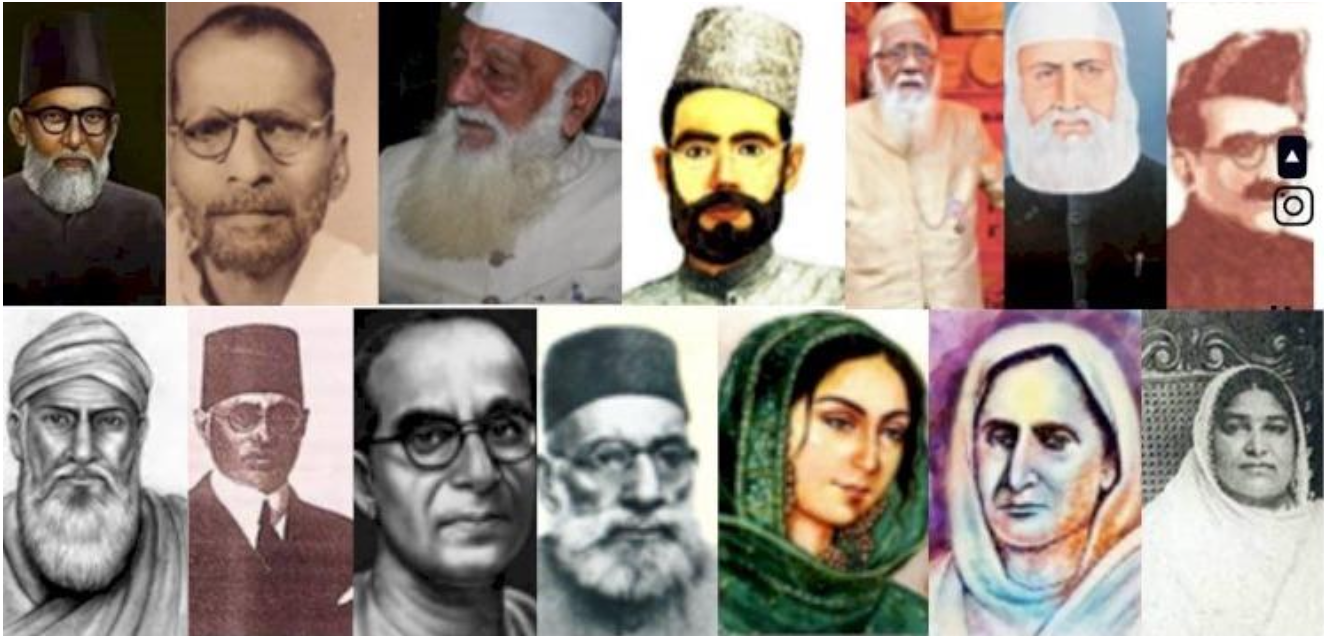
India’s independence on 15 August 1947 was won through generations of resistance—from the Uprising of 1857 to mass movements led by Gandhi, Nehru, Patel, Abdul Ghaffar Khan, Maulana Azad, and countless others. Alongside these familiar names stand thousands of Muslim freedom fighters whose sacrifices are often overlooked. As one account notes, the India Gate rolls of honour include a large number of Muslim names; and commentary cited in the piece (e.g., Khushwant Singh via Milli Chronicle) stresses that Muslim participation was far greater than commonly acknowledged. This page restores part of that memory.
Why this matters
Today, when misinformation questions Muslim patriotism or erases their role, history offers a corrective: Muslim Indians organized, financed, wrote, fought, healed, and led—from 1857 to the Quit India era—often at immense personal cost.
Featured Freedom Fighters (Brief Profiles)
Ismail Sahib (Quaid-e-Millat) — Statesman of Constitutional India (1896–1972)
Founded the Young Muslim Society (age 14) and Majlis-ul-Ulama (1918); rose to lead the Madras Muslim League.
One of the 28 Muslim League members who stayed in India post-partition; helped shape debates in the Constituent Assembly.
First President of the Indian Union Muslim League (1948); later served in Rajya Sabha (1952–58) and Lok Sabha (1962–70).
“Muslim Vellori” (Mohammed Abdul Wahid Khan) — Khilafat & Social Mobiliser (1883–)
Khilafat activist who worked with Gandhi, the Ali Brothers, Dr. M.A. Ansari, Hakim Ajmal Khan, Saifuddin Kitchlew.
Frequently imprisoned (1924–27); remembered in Bengaluru for fearless public organizing and social work.
Captain Abbas Ali — INA Veteran & Lifelong Dissenter (1920–2014)
Inspired by Bhagat Singh; joined Naujawan Bharat Sabha, AISF, and later Azad Hind Fauj (INA).
Fought in Arakan, captured and court-martialed with a death sentence (commuted after independence).
Jailed repeatedly during post-independence political struggles (including the Emergency); symbol of steadfast republicanism.
Allama Fazl-e-Haq Khairabadi — Scholar of 1857 (1797–1859)
Prolific scholar who played a key role in Delhi (1857) alongside Bahadur Shah Zafar.
Arrested and transported to Andamans; memorialised for his intellectual leadership and anti-colonial counsel.
Syed Mohammad Sharfuddin Quadri — Physician of the Satyagraha (1901–2015)
Unani physician; co-founded Unani Medical College & Hospital, Kolkata; editor of Hikmat-e-Bangala.
Joined Salt Satyagraha (1930); jailed with Gandhi in Cuttack and assisted him closely during civil disobedience.
Opposed the Two-Nation Theory; later honoured with the Padma Bhushan.
Maulana Mazharul Haque — Humanitarian & Congress Leader (1866–1930)
Lawyer-turned-activist; Vice-Chair of Bihar Congress; pivotal in Champaran Satyagraha, Khilafat, Non-Cooperation.
Donated all property for education; remembered for famine relief (1897) and community uplift.
Mohammad Abdur Rahiman — Kerala’s Nationalist Voice (1898–1945)
Khilafat & Non-Cooperation organiser; restored peace after the 1921 Malabar disturbances.
Jailed for Salt Satyagraha; led KPCC (1939), opposed the Two-Nation Theory; commemorated by colleges and a postal stamp.
Maulvi Ahmadullah Shah Faizabadi — “Lighthouse of Rebellion” (1787–1858)
Sufi-scholar-warrior of 1857; fought alongside Begum Hazrat Mahal, Khan Bahadur Khan and others.
So feared that the Company offered ₹50,000 for his capture; martyred in 1858.
Maulana Barkatullah Bhopali — Global Revolutionary (1854–1927)
Teacher, polyglot, and international organiser; linked with Ghadar networks and Kabul plans (1915).
Advocated Hindu-Muslim unity and a worldwide anti-colonial front.
Yusuf Meherally — “Quit India” Slogan & Youth Leader (1903–1950)
Socialist leader; coined “Quit India” (adopted by Gandhi in 1942).
Elected Mayor of Bombay while imprisoned; led youth delegations to World Youth Congress (NY, 1938) and Mexico.
Maulana Hasrat Mohani — Poet-Patriot (1875–1951)
Firebrand journalist (Urdu-e-Mualla); jailed repeatedly; among the earliest to demand “Complete Independence.”
Credited with popularising “Inquilab Zindabad” (1921); straddled Congress, Left currents, and literary leadership.
Women Freedom Fighters (Selected)
Begum Hazrat Mahal — Regent of Awadh (d. 1879)
Led resistance in 1857, defeated British at Chinhat; rejected inducements to surrender; died in Kathmandu.
Bi Amma (Abadi Bano Begum) — Mother of a Movement (d. 1924)
Early woman orator (often in purdah); mobilised Khilafat, Swadeshi, and inter-communal unity; mother of the Ali Brothers.
Amjadi Begum — Organiser & League Trailblazer
Partnered Bi Amma and Mohammad Ali Jauhar; only woman member of the Muslim League’s first Working Committee; pushed women’s electorate in 1937.
Asghari Begum & Habiba — 1857 Martyrs
Asghari Begum (b. 1811): key role in Western UP resistance; reportedly burnt alive by the British (1858).
Habiba: Gujjar fighter of Muzaffarnagar; hanged with 11 women comrades (age ~25).
Suraiyya Tyabji — The Flag & the Future (1919–)
Artist-reformer linked to Constituent Assembly committees; widely credited in accounts with finalising India’s national flag design (saffron-white-green with navy Ashoka Chakra).
In Essence
From battlefields to courtrooms, editorials to classrooms, these men and women anchored India’s freedom struggle with courage, intellect, and service. Remembering them is not just about the past—it is a pledge to pluralism in the present.
“Indian Freedom is written on Muslims’ blood… their participation was far more than their share in population.” — attributed to Khushwant Singh (as quoted in the submitted text)