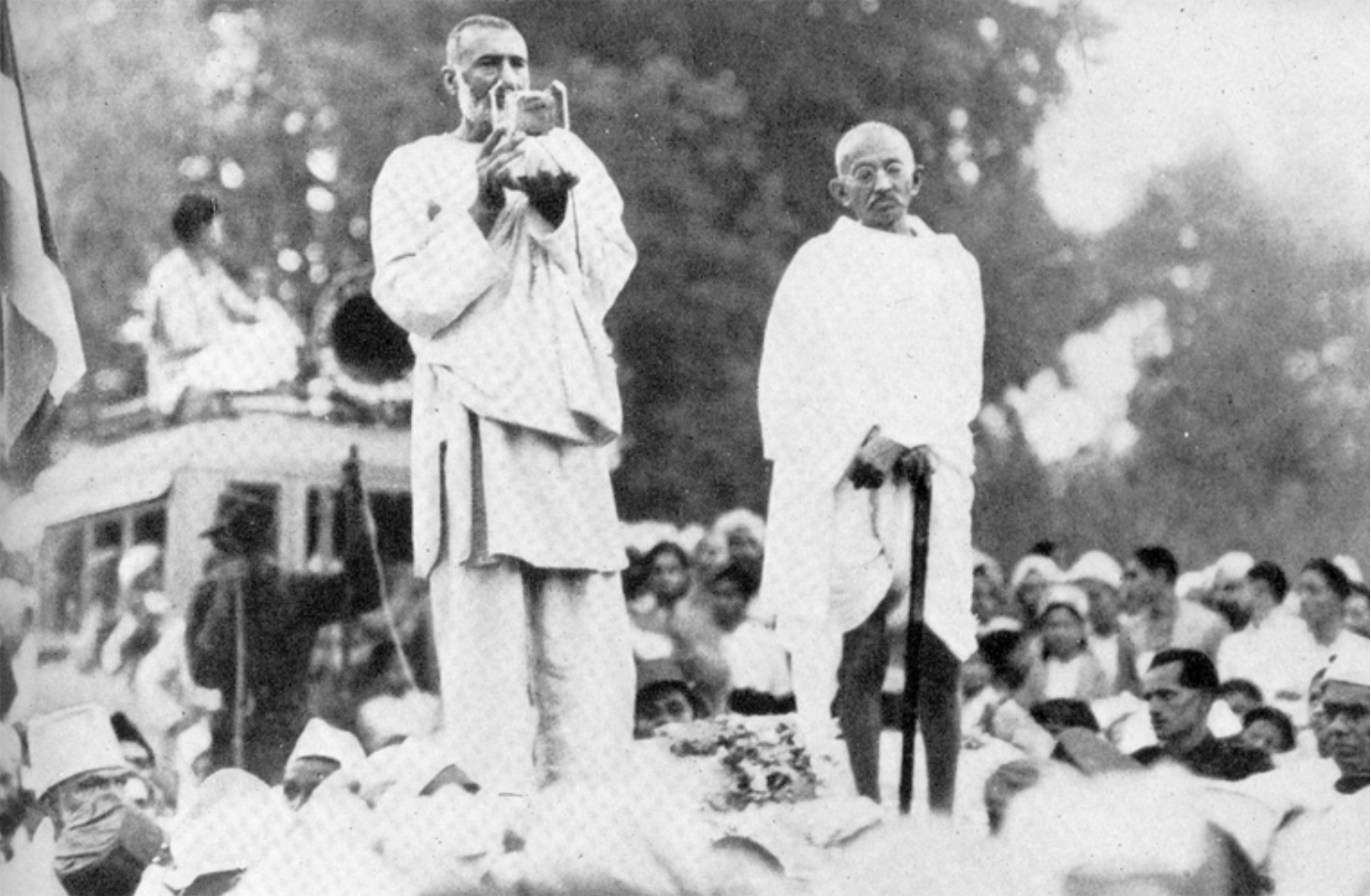
Frontier Gandhi
 admin
adminAn Ode to Frontier Gandhi — The Man of Peace Who Fought for a United India
By Rinchen Norbu Wangchuk | Edited by Saiqua Sultan
Khan Abdul Ghaffar Khan (1890–1988), known to the world as Bādshāh Khān or Frontier Gandhi, was a visionary Pashtun leader, reformer, and freedom fighter whose unwavering faith in non-violence transformed one of the most turbulent regions of South Asia into a cradle of peace activism. A close friend and disciple of Mahatma Gandhi, he stood for unity, harmony, and justice across faiths — values that continue to inspire generations.
Early Life and Awakening
Born on February 6, 1890, in Utmanzai (present-day Khyber Pakhtunkhwa, Pakistan), Khan was raised amidst the proud but conflict-ridden Pashtun tribes. Rejecting opportunities under British rule, he pursued education at Aligarh Muslim University and soon joined India’s independence movement in 1911.
Moved by the social decay caused by illiteracy and blood feuds, he devoted himself to educating Pashtun men and women, traveling across hundreds of villages to promote peace, learning, and social reform. His message was simple yet revolutionary: true courage lies not in revenge, but in service and forgiveness.
Khudai Khidmatgar – Servants of God
Inspired by Gandhi’s philosophy of Ahimsa (non-violence) and Satyagraha (truth force), Khan founded the Khudai Khidmatgar (“Servants of God”) movement after returning from Hajj.
Known as the Red Shirts (Surkh Pōsh), these volunteers practiced disciplined non-violence even in the face of brutal repression.
Their courage was most visible during the Qissa Khwani Bazaar massacre of April 23, 1930, when British troops opened fire on unarmed protestors in Peshawar — killing hundreds. Two platoons of the Royal Garhwal Rifles refused to fire, symbolizing the moral power of non-violent resistance.
A Life of Integrity and Sacrifice
Through the 1930s, Khan worked alongside Gandhi and the Indian National Congress, even being offered its presidency — which he humbly declined, calling himself “a simple soldier and a Khudai Khidmatgar.”
He later participated in the Quit India Movement (1942), but the Partition of India (1947) shattered his dream of a united subcontinent. Opposed to the division of India, he lamented to Congress leaders, “You have thrown us to the wolves.”
After Partition, he advocated for Pakhtunistan, a semi-autonomous Pashtun region within Pakistan — a demand that led to his persecution, repeated imprisonments, and years of exile. Despite suffering, he never abandoned his commitment to peace, dialogue, and non-violence.
Recognition and Legacy
Although vilified by successive Pakistani regimes, Ghaffar Khan was revered across India as a hero of humanity. He was awarded the Bharat Ratna in 1987, India’s highest civilian honour, for his lifelong devotion to peace and unity.
At his death in 1988, more than 200,000 mourners — including Afghanistan’s President Mohammed Najibullah and India’s Prime Minister Rajiv Gandhi — attended his funeral in Jalalabad, Afghanistan. A one-day ceasefire was declared during the Soviet-Afghan War so mourners could safely cross the Khyber Pass — an extraordinary testament to his influence.
Enduring Inspiration
“He confronted rulers with truth, stood for the weak, and believed that love and justice were stronger than violence.” — Rajmohan Gandhi, Ghaffar Khan: Nonviolent Badshah of the Pakhtuns
Khan Abdul Ghaffar Khan’s story is a reminder that peace requires more courage than war. His legacy as the Frontier Gandhi — a bridge between Hindus and Muslims, India and Pakistan, power and conscience — remains one of the greatest symbols of moral strength in South Asian history.